Now Publicly Available
- Stock Symbol: NEWH

Investors Click Here

Massive Source of Heat for ThermoLoop

ThermoLoop™ is a novel thermochemical process that uses inexpensive heat instead of expensive electricity to dramatically reduce the cost of clean hydrogen production from water.

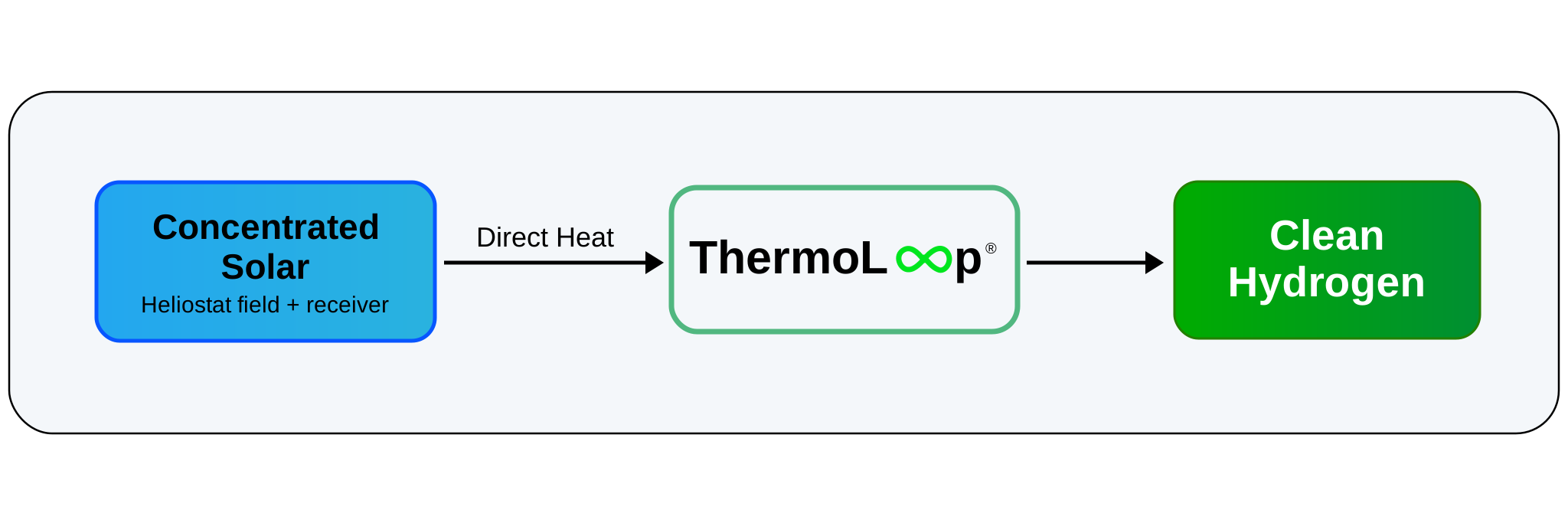
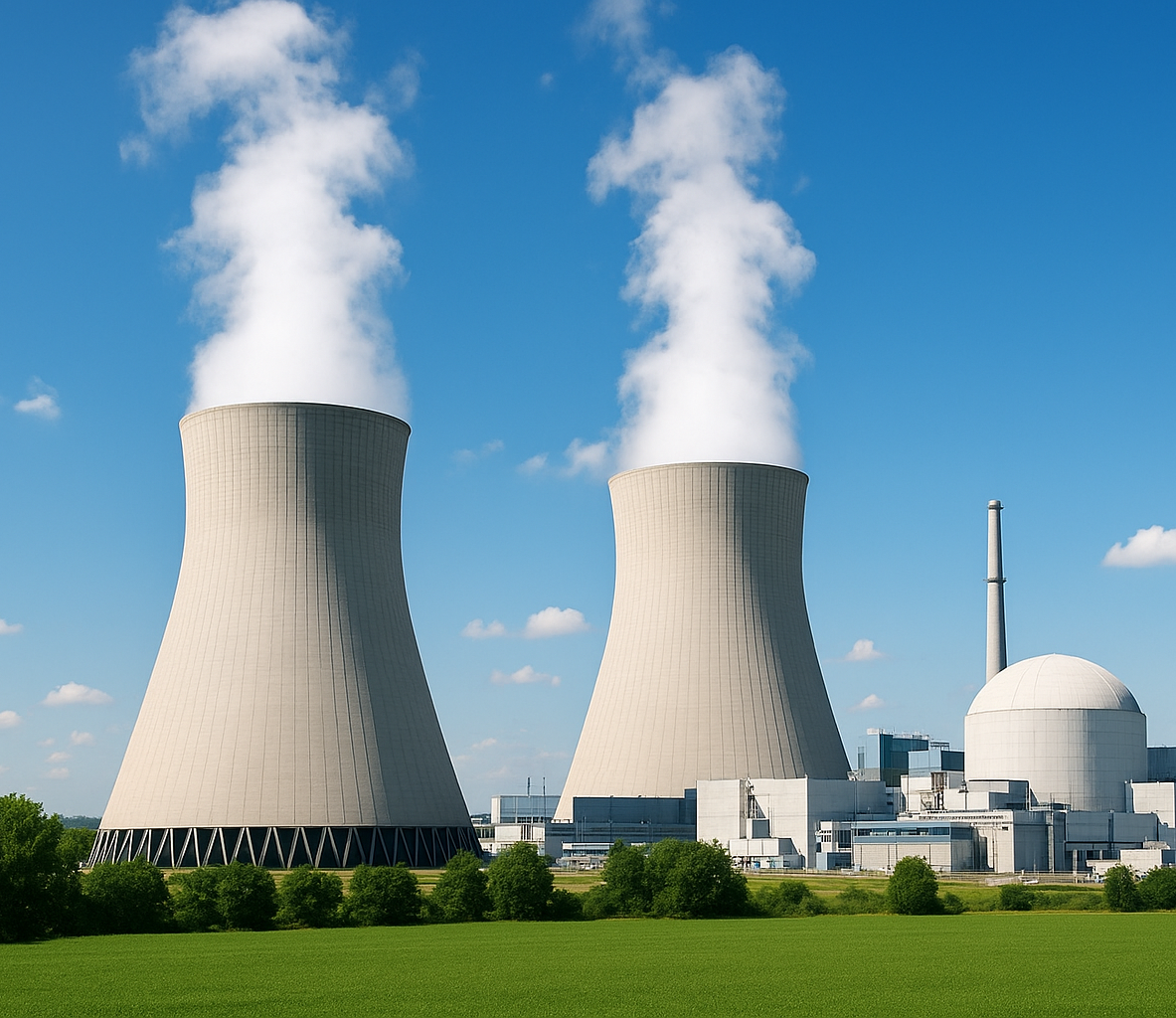
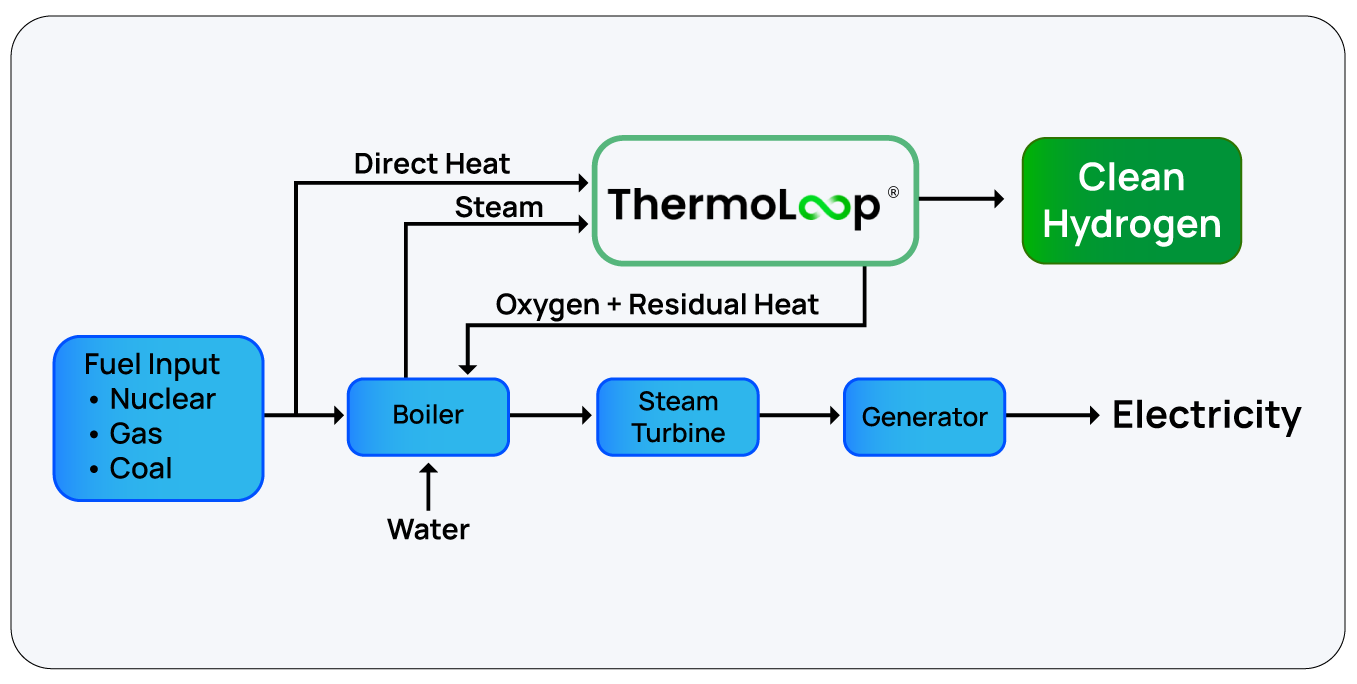
Power plants are ideal sources of constant and reliable baseload heat for ThermoLoop. When fully developed, ThermoLoop can be integrated into current and future power plants for large scale clean hydrogen production.

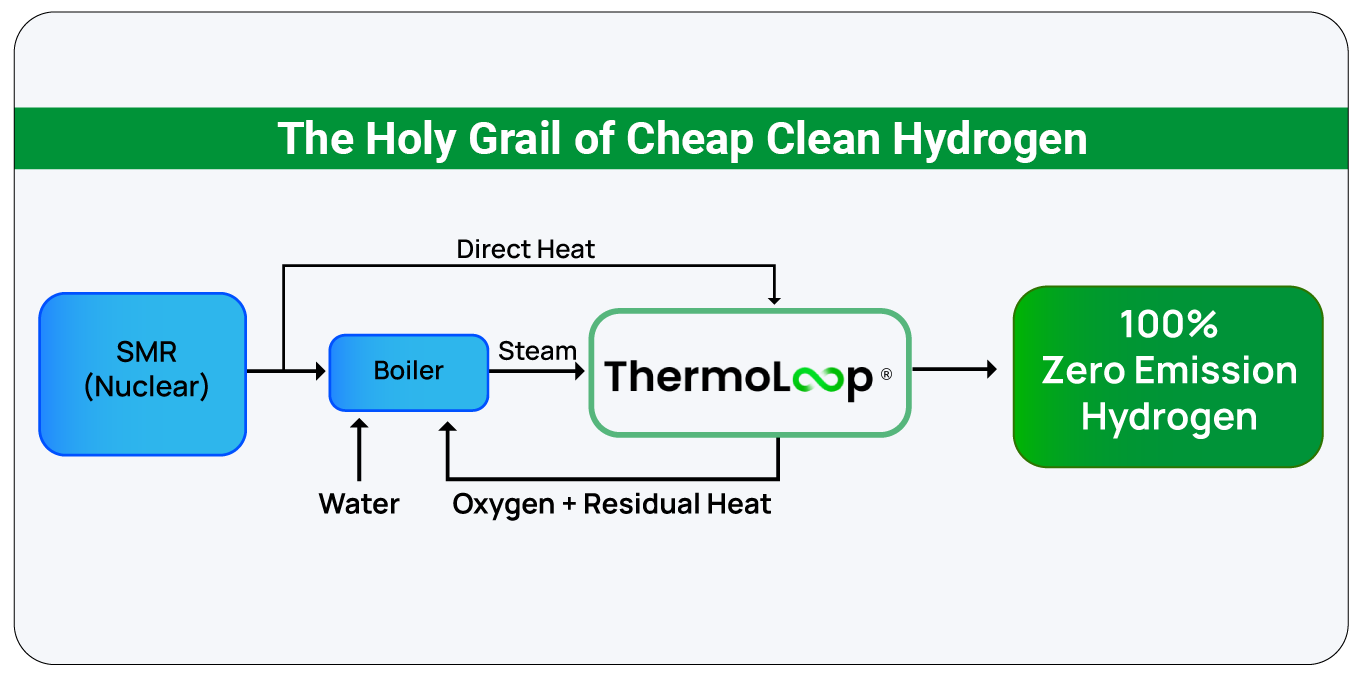
The benefits of this integration are twofold: power plants produce constant high temperature heat and high temperature steam – the two key ingredients needed by ThermoLoop. Furthermore, small modular nuclear reactors of the future can be used as primary heat sources for ThermoLoop to create dedicated clean hydrogen production plants.

Heat Before Electricity

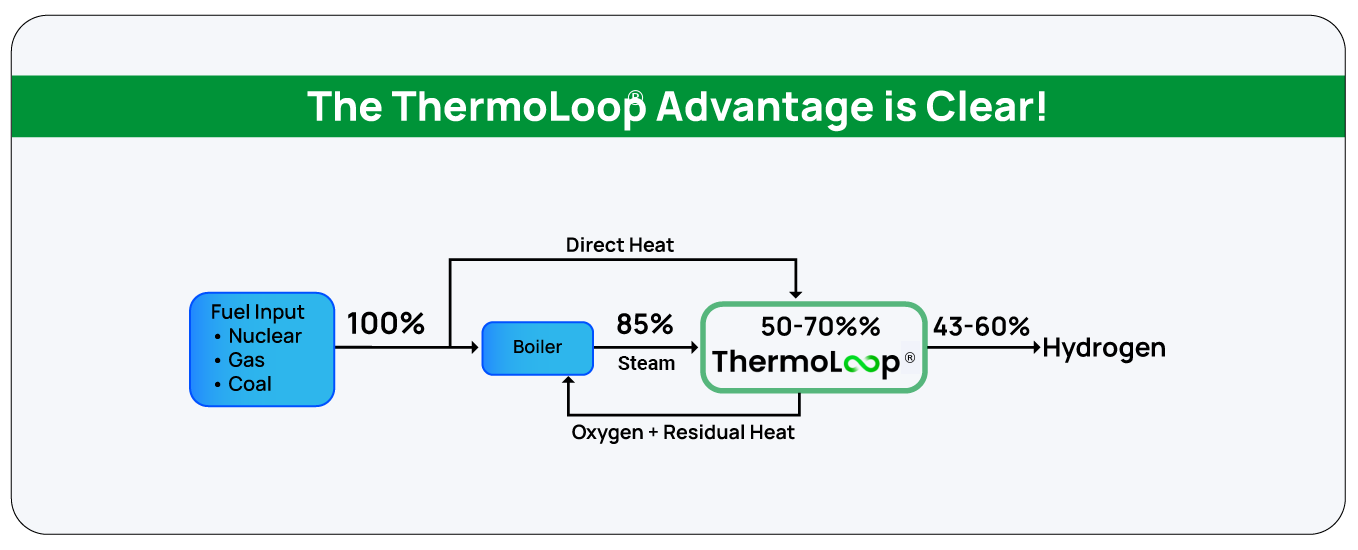
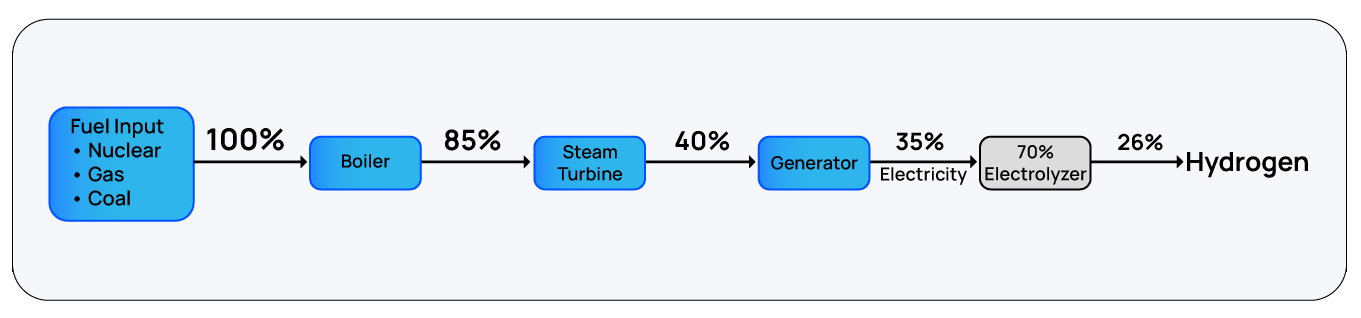
In coal, gas and nuclear power plants, heat is produced first and then converted to electricity by mechanical turbine generators with relatively low efficiency.

In most conventional power plants, only 35% of the input energy is converted into electricity, and available to produce hydrogen with conventional electrolyzers.
Heat Before Electricity

If heat was used directly, near 100% of the input energy is available to produce hydrogen with ThermoLoop. ThermoLoop is more energy efficient.

Heat Before Electricity

By coupling directly to heat from power plants, ThermoLoop can eliminate most electricity use and overcome fundamental limits that have prevented electrolyzers from unleashing the Hydrogen Economy.

We believe ThermoLoop has the potential to be far more cost-effective than electrolyzers in both capital and operating cost, unlocking the full potential and benefits of clean hydrogen.

Huge Number of New Power Plants

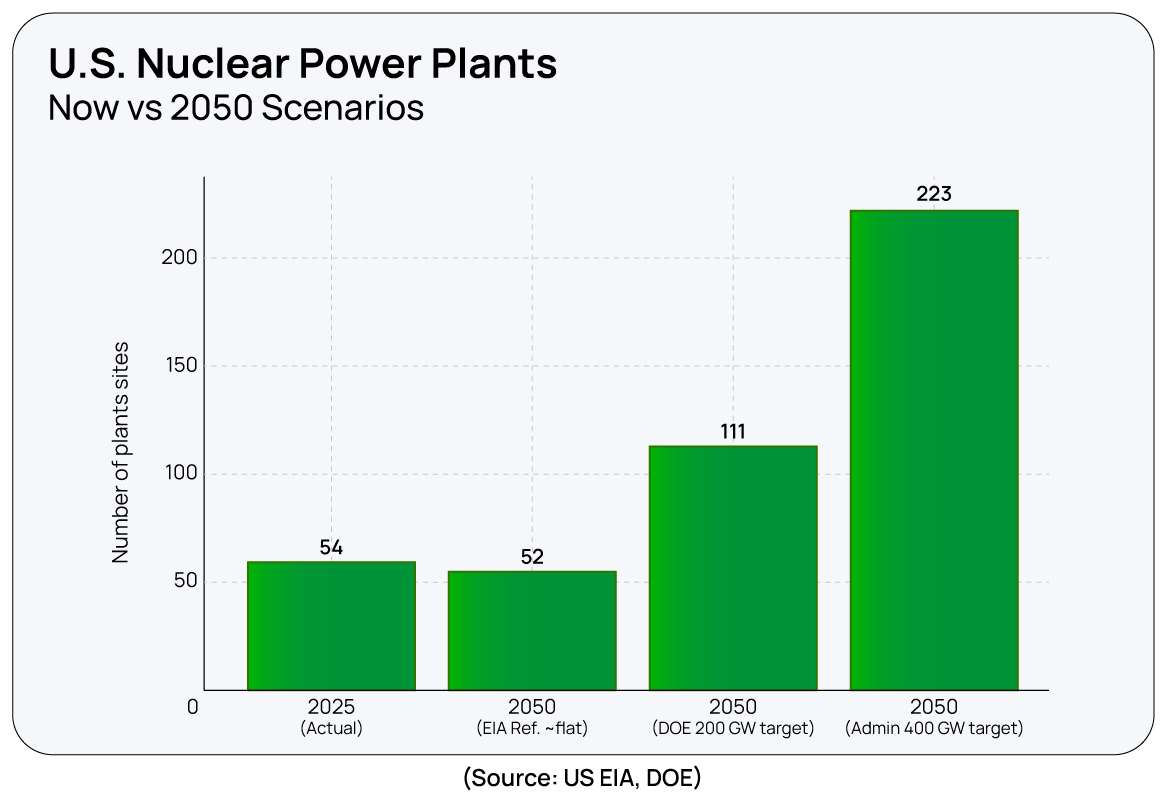
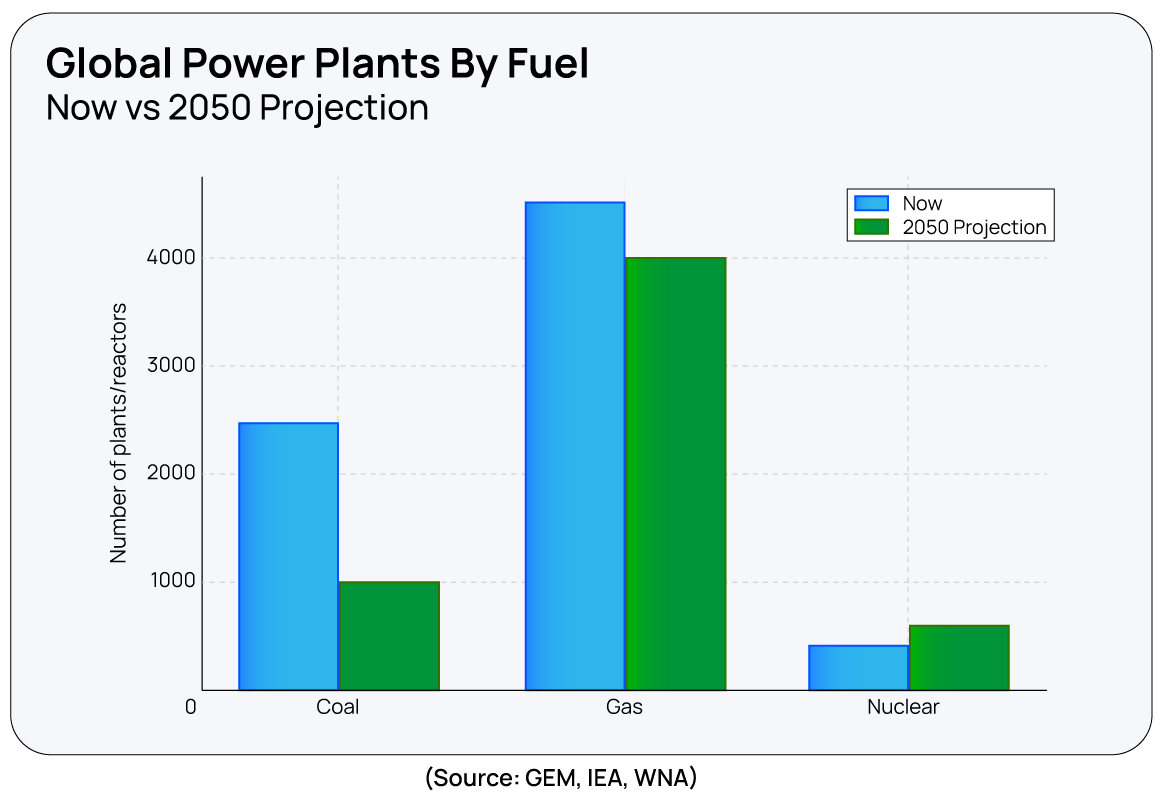
Driven by population growth and the insatiable demand for artificial intelligence (AI) datacenters, more power plants are projected to be built over the coming decades.

To meet the power demands of the United States, Energy Secretary Chris Wright stated that the U.S. will add 300 gigawatts of nuclear capacity by 2050. He noted that the primary way to achieving this goal is through the deployment of Small Modular Reactors (SMRs). SMRs are a new class of compact nuclear reactors, ranging from 30 to 1,000 megawatts of thermal energy, designed for distributed power generation to serve datacenters, cities and regions.

Huge Number of New Power Plants
image-1 image-2

In 2024, Google signed the world’s first SMR power purchase agreement for up to 500 megawatts, with the first 50-megawatt plant sited in Oak Ridge, Tennessee.

Massive Scale

In 2024, the global hydrogen market is $176 billion, representing 100 million metric tons of hydrogen production. This is projected to surge to $1.66 trillion and 600 million metric tons by 2050 (Deloitte, 2023).

Nearly all the hydrogen today is made from the thermochemical splitting of natural gas into carbon dioxide and hydrogen.

Power plants have already perfected the art of massively scaling electricity production. By coupling to ThermoLoop, they’re ideally suited to extend that massive scale capability to thermochemical splitting of water into oxygen and clean hydrogen.

In the case of coupling nuclear power plants to ThermoLoop, the result is dramatic: oxygen and 100% zero-emission hydrogen.

Massive Scale Clean Hydrogen

Consider the following scenario:

  • A barebones 50-megawatt SMR (reactor + steam generator + primary loop) coupled to ThermoLoop (assuming 50% energy efficiency) could potentially produce 54 metric tons of hydrogen per day.
  • This is enough to fuel 54 standard 1-ton hydrogen fueling stations, handling 10,000 hydrogen fueled passenger vehicle fill-ups per day.
  • Total land area is 6-11 acres (or 0.01 square mile)

Power Plants + ThermoLoop = Massive Scale Clean Hydrogen

The Benefits Are Clear

By coupling to ThermoLoop, power plants can play a critical role in enabling the Hydrogen Economy.

The benefits to power plants are clear:

  • Cogeneration of clean hydrogen provides a more valuable revenue stream than electricity alone
  • Producing clean hydrogen lowers the plant’s overall carbon footprint
  • All the know-how of power plant design and operations are directly applicable to clean hydrogen production via ThermoLoop.

Cogeneration Today

Cogeneration Today

Dedicated Production Tomorrow

Dedicated Production Tomorrow